
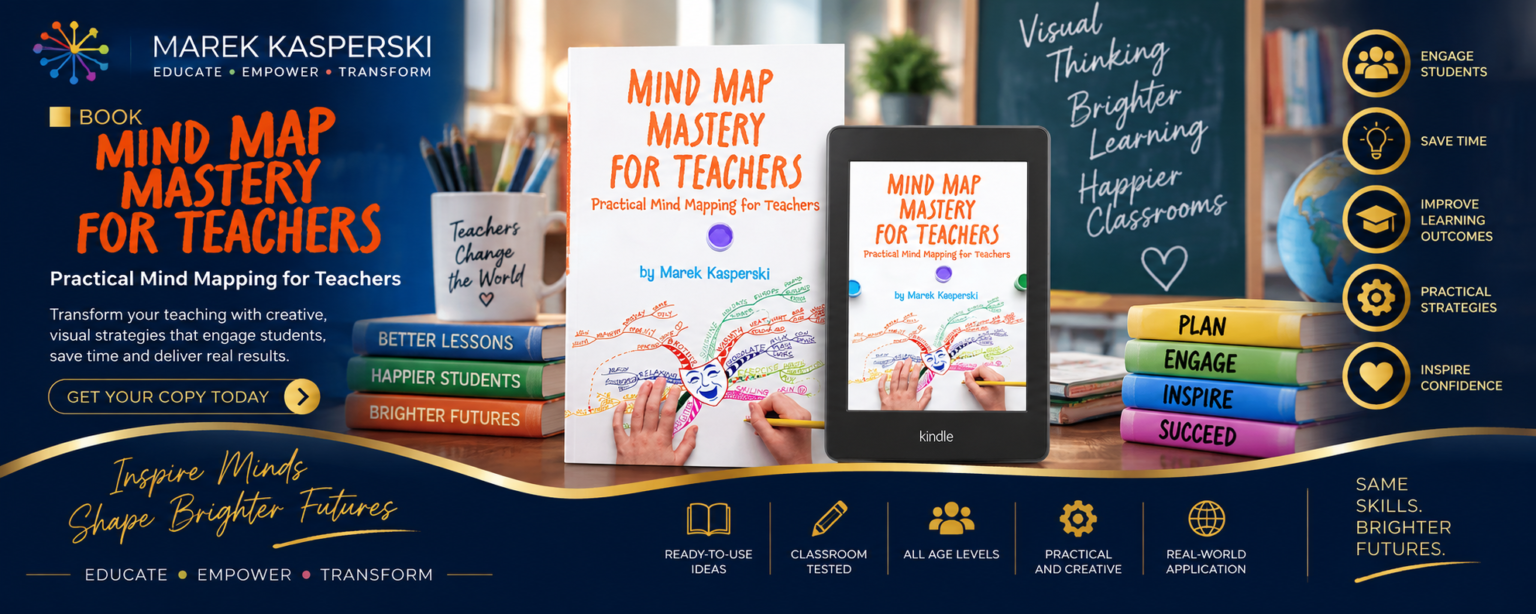
Mind Map Mastery for Teachers
A Practical Mind Mapping Book for Teachers

About the Book
Break free from traditional study methods that rely on rote memorisation and passive learning.
Mind Mapping Mastery for Teachers introduces a dynamic, visual approach that sparks creativity, improves memory retention, and makes learning genuinely enjoyable.
Perfect for learners of all ages, Mind Maps turn study time into a more engaging, effective, and empowering experience, whether on paper or through digital tools.
Start early, think radiantly, and unlock a lifelong love of learning.
Your brain is like a sleeping tiger - Mind Maps are here to wake it up.
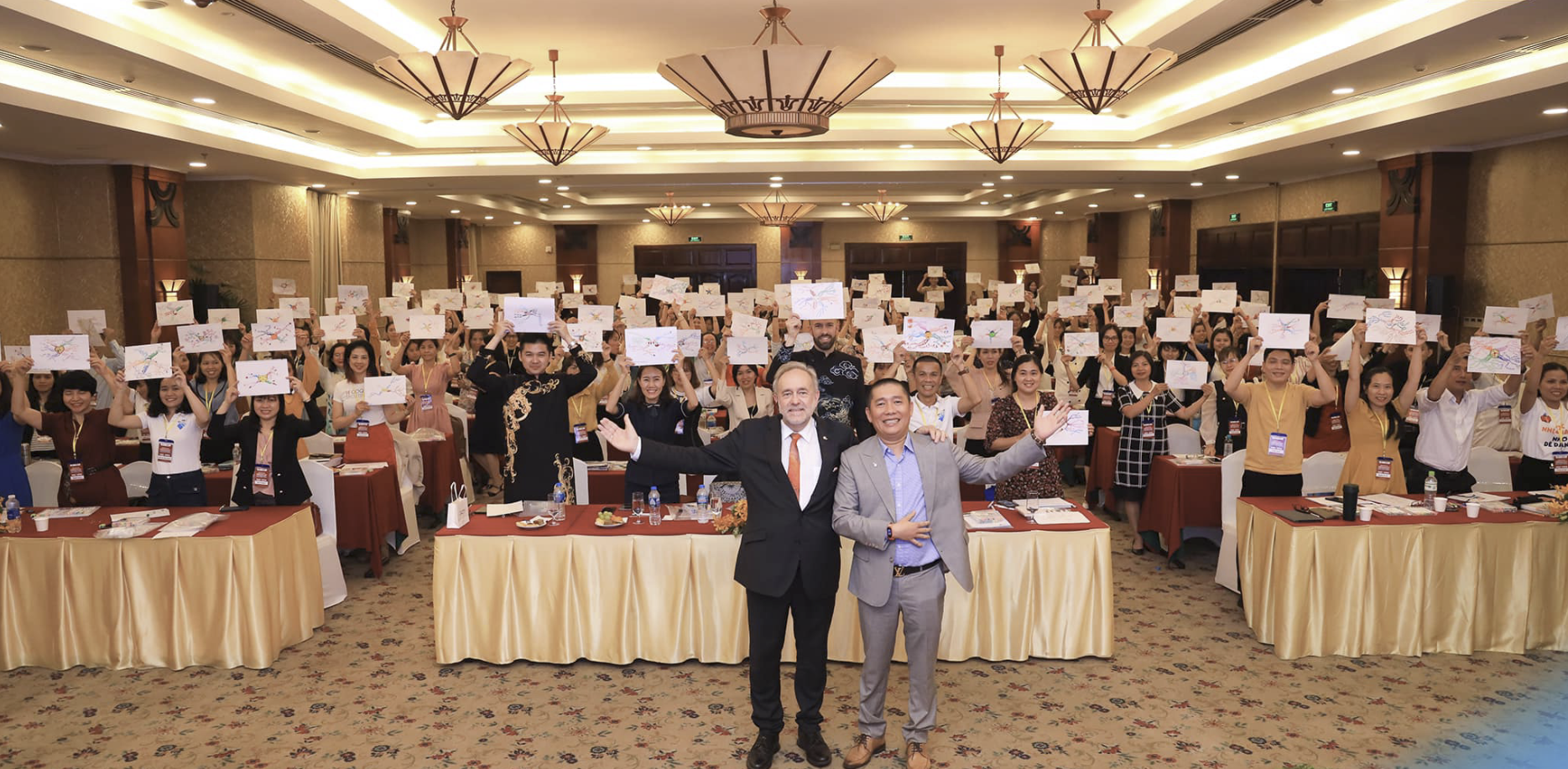
Author: Professor Marek Kasperski
Professor Marek Kasperski, a close friend and long-time collaborator of Tony Buzan, the inventor of Mind Maps, was personally trained in Mind Mapping by Buzan. Drawing on this unique mentorship over many years of experience, Marek has taught Mind Mapping to over 20,000 people worldwide, including more than 5,000 school students. Mind Map Mastery for Teachers is the result of this dedication to helping educators and learners unlock their full potential.
Chapters and Sub-Chapters
What is a Mind Map?
Why Mind Maps Are Ideal for Students?
The Five Laws of Mind Mapping
The Digital Dimension
Mind Maps for Teachers
Unlocking Your Potential
The Most Important Graph (M.I.G.)
Tackling Stress and Procrastination
Rethinking Exam Preparation
The Myth of Cramming
The Power of Spaced Review
Short-Term vs Long-Term Memory
Working Memory and Academic Success
Mind Mapping Software: A Double-Edged Sword?
Creativity: The Core of Mind Mapping
Mind Maps in the Hands of Teachers
Skills for Life
Summary
Understanding the Brain’s Potential
Visualising One Trillion with Money
The Power of a Single Neuron
A Mind-Bending Analogy
The Myth of “10% Brain Use”
Why Don’t We Use It All?
The Problem with Traditional Note-Taking
The Monotony of Monotone Notes
The Limits of Linear Writing
Engaging the Full Brain
Why Mind Maps Work
The Basic Ordering of Ideas (BOI)
Looking Ahead
The Power of BOIs: Unlocking Creativity
Building Creative Thinking with BOIs
The Strength of the Mind Map Overview
Associations and Meaningful Connections
Keywords: The Brain’s Favourite Fuel
Feeding Our Starving Minds
A Journey Through the Ages
Beyond Information: A New Age Emerges
The Age of Intelligence
Introducing MIG: The Most Important Graph
How MIG Works
A Memory Test: The 30-Word Exercise
The Seven Efects of Learning
Why MIG Matters
Mind Maps: A Web of Von Restorfs
The Hidden Language of the Mind
A Lesson from Tony Buzan
The Demonstration
Introduction
The Central Image
A Personal Experiment in Guangzhou
Law Number Three – Colour
The Von Restorff Effect
Law Number Four – Pictures
Law Number Five – Structure.
Preparing to Create Your First Mind Map
The Tools of the Trade
Step 1: Use a Blank Sheet of Paper
Step 2: Choosing a Colour and Building Your Branches
Step 3: Adding Keywords
Step 4: Adding Secondary-Level Branches
Step 5: Radiating Branches
Step 6: Adding the Next Primary Branch
Step 7: Creating Links Between Branches
Understanding Stress in Children
Early Separation and Social Pressures
The Burden of Expectations
The Impact of a Connected World
Understanding Stress
Understanding the Impact of Stress on Learning
What Happens When We Learn Something New?
The Decline of Memory Over Time
The Good News: A Solution Exists
Review and Mind Mapping
The Role of Review in Long-Term Learning
Why Traditional Revision Fails
The Forgetting Curve and the Power of Review
What is the Method of LOCI
The Power of Spatial Memory
Rethinking Revision: A Smarter Way to Prepare
Sleep, Blue Light, and Exam Readiness
The Day of the Exam – Staying Calm, Focused, and Prepared
Motivation, Dopamine, and the Path Away from Procrastination
Pro’s and Con’s
BuzanMind Maps
Can Some People Be More Creative Than Others?
The Paperclip Test: Unlocking Creative Potential
The Provocation Operation: Rewiring the Creative Mind
The Role of Mind Maps in Creative Thinking
Short-Term Memory: Capacity, Challenges, and Growth
Mind Mapping as a Solution for Short-Term Memory Challenges
Navigating Information Overload: Speed Reading in the Digital Age
The Power of Forward Momentum in Reading
Establishing and Enhancing Your Reading Speed
E. Paul Torrance and the Science of Creativity
Category 1: Alternative Uses
Why This Matters
Drawing the Unexpected: The Incomplete Drawing Test
The Mechanics of the Figure Test
What the Test Measures
Why Visual Creativity Matters
Practical Application for Teachers
Creative Connections: The Power of Associations
Tony Buzan and the Measurable Power of Creativity
Understanding What Creativity Is
Mind Maps as a Gateway to Creativity
How Can We Supercharge Creative Thinking?
Expanding the Role of Keywords
Revisiting the Method of Loci
The Three Pillars of Memory
Association
Location
The Link Method – Turning Words into Stories
Why Stories Help Us Remember
How the Journey Method Works
The SEAHORSE Framework – Enhancing Memory with Purpose
The Mind Mapping Experiment: A Classroom Transformation
Over 30 classroom exercise to give your students.